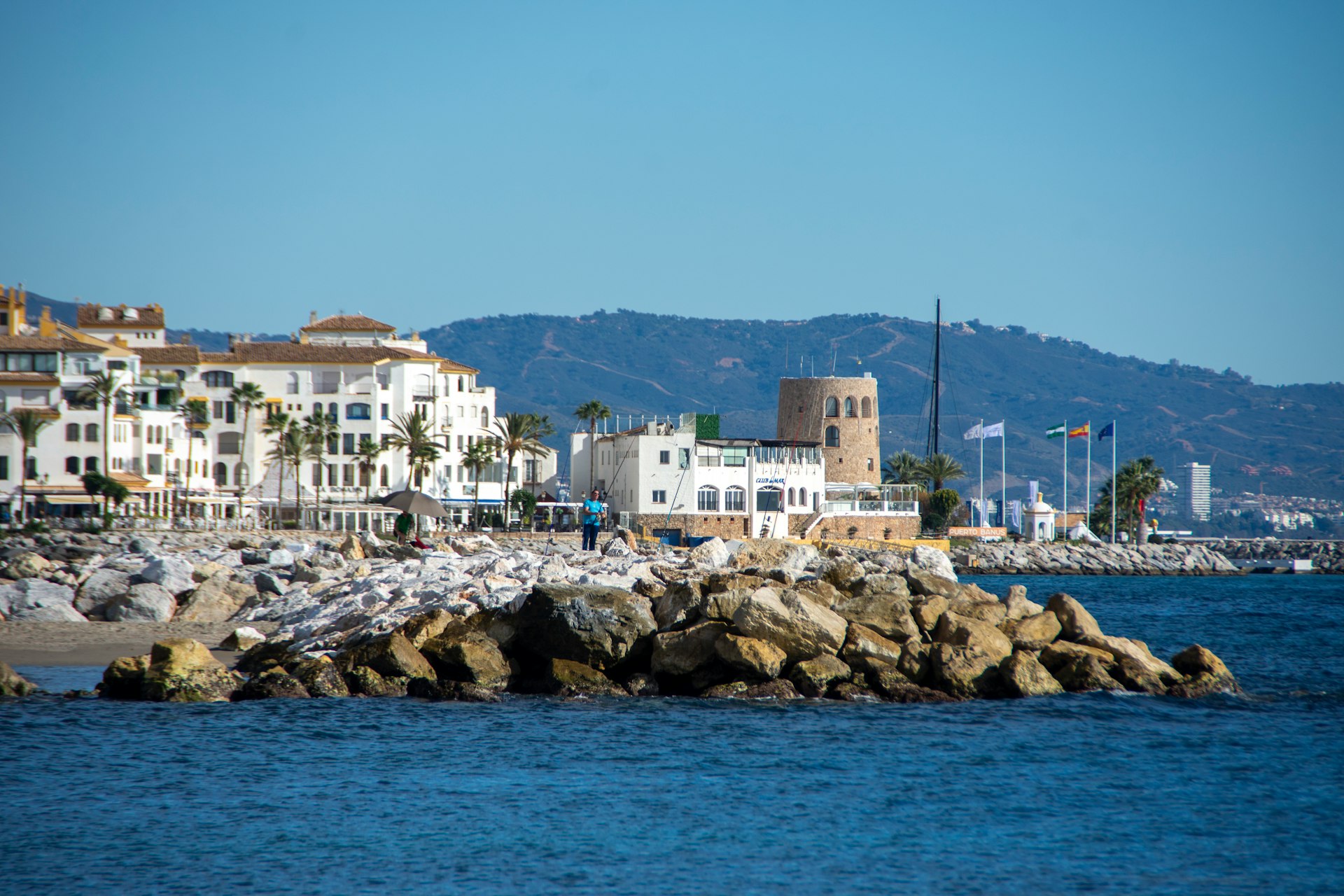
Why Estepona Is Outperforming Marbella in 2026: What the Numbers Tell British Buyers
Two years ago, a British couple I was working with had their hearts set on Marbella. Good budget, motivated to buy. Then we ran the numbers side by side: same property type, same brief, 25 kilometres apart. The Estepona option was 28% cheaper per square metre, offered a better rental yield, and had planning permission already in place rather than a three-year off-plan wait. They bought in Estepona. A year later, the value had risen more than they expected.
That story is playing out across the Costa del Sol right now. Estepona is no longer the underdog.
Here is what the data actually shows in 2026.
The Price Gap at a Glance
Marbella has long commanded a premium, and in 2026 it still does. But the question is whether that premium makes sense for buyers working to a typical British budget of £400,000 to £700,000.
Current average prices, based on Colegio de Registradores de la Propiedad data for Q1 2026 and Malaga province transaction records:
- Estepona municipality: €3,900 to €4,260 per square metre
- Marbella municipality: €4,900 to €5,400 per square metre (with the Golden Mile and Sierra Blanca pushing well above €8,000/m2 at the top end)
On a 100m2 apartment, that is a raw price difference of €100,000 to €150,000 before fees and taxes. For British buyers paying 10 to 12% in acquisition costs on top, the gap in sterling is often larger still.
Price per square metre alone does not tell the full story, though. The more important question is which market is moving faster, and why.
Year-on-Year Growth: Estepona Pulling Ahead
Ministerio de Vivienda transaction data and published Malaga Property Registrar records show Estepona posting average residential price growth of around 12 to 14% in 2025. Marbella saw solid growth too, in the region of 9 to 11%, but the trajectory is different.
The key factor is supply. Marbella’s urban planning history is complicated. The municipality spent much of the 2000s and early 2010s dealing with the fallout from a large-scale planning corruption scandal that effectively froze legitimate residential development for years. That supply drought pushed prices up sharply through the 2020s, but it also means growth becomes harder to sustain as buyers increasingly question what they are actually getting per euro.
Estepona, by contrast, has had a functioning PGOU (general urban plan) and has steadily approved new residential projects since 2018. That combination of genuine demand meeting new supply has produced consistent double-digit annual growth without the artificial scarcity premium built into Marbella’s market.
The New Golden Mile Effect
The coastal stretch between San Pedro Alcantara and Estepona has been marketed as the New Golden Mile for a decade. In 2026, it has graduated from a marketing label into a genuine market reality.
This corridor, which sits within the Estepona municipality for much of its length, now has a concentration of new-build developments that simply does not exist in central Marbella. Projects from Taylor Wimpey Spain, Metrovacesa and a cluster of Andalusian boutique developers have delivered several thousand units since 2022, with more under construction.
For British buyers, this matters in two specific ways. First, you can buy new-build at Estepona prices with a specification that matches what Marbella charges €1,000 to €1,500/m2 more for. Second, the area is generating a solid short-term rental audience, which matters for buyers who want yield alongside lifestyle use.
Old Town Regeneration: The Less Talked-About Driver
Marbella’s brand is globally recognised. Estepona’s has traditionally been quieter. That is changing.
The Estepona town hall has been running a systematic casco historico regeneration programme since 2013. The results are visible: more than 100 murals across the whitewashed streets of the Old Town, flower-lined pedestrian lanes, a renovated marina, a new covered market, and a cultural calendar that gives the town a year-round identity rather than a three-month summer peak.
This matters for property values because buyers increasingly want somewhere they can actually live, not just visit. Estepona’s Old Town now competes with Marbella’s on atmosphere for the buyer who wants authentic Andalusian character. Prices in the casco historico for renovated townhouses have risen sharply as a result, with some properties now reaching €4,500 to €5,000/m2, narrowing the gap with comparable Marbella properties considerably.
Infrastructure Catch-Up
Three practical infrastructure points that British buyers often overlook when comparing the two towns:
The AP-7 toll motorway runs the full length of the Costa del Sol, making journey times predictable. Estepona to Marbella is around 25 minutes. Estepona to Malaga airport is 50 to 60 minutes depending on traffic. Neither is a hardship for a lifestyle property.
Healthcare access has historically been cited as a reason to choose Marbella, given the established Hospital Costa del Sol. But Estepona now has its own public hospital, complemented by several well-regarded private clinics including branches of the major networks. For retired British buyers weighing healthcare as a location factor, the practical difference between the two towns is now marginal for routine care. See our healthcare guide for British residents on the Costa del Sol for the full comparison by residency situation.
The Estepona port expansion is ongoing as of mid-2026. The project will increase marina berths significantly and is expected to add a further premium to frontline port-adjacent properties once complete.
Rental Yields: Where Estepona Wins Outright
For buyers who plan to rent their property when not using it, the numbers clearly favour Estepona.
Gross rental yields in Estepona currently run at 5.0 to 6.5% for well-located two-bedroom apartments, rising to 6.5 to 8.0% for properties within walking distance of the beach or port. In Marbella, strong demand produces broadly similar gross rental income in absolute euro terms, but because the purchase price is higher, the yield percentage is lower, typically 3.5 to 5.5% for comparable properties.
Some important caveats worth flagging:
- Community fees in new-build Estepona developments run €200 to €400 per month and must be factored into net yield calculations
- Andalusia’s holiday letting licence (Viviendas con Fines Turisticos) applies equally to both municipalities and requires registration before you list on Airbnb or similar
- Rental income is taxable for UK non-residents under Form 210 at the current rate of 24%. See our Form 210 guide for the deadlines and mechanics
Who Is Buying Where in 2026?
The buyer profiles for Estepona and Marbella have diverged quite clearly from what we see on the ground.
Estepona buyers in 2026 tend to be:
– British buyers with a budget of £350,000 to £650,000 looking for genuine value and growth potential
– Yield-focused investors who want rental income alongside capital appreciation
– Retirees who want an authentic Spanish town over an international resort environment
– Buyers based near Gibraltar (25 to 30 minutes away) looking for residential rather than commuter property
Marbella buyers in 2026 tend to be:
– Buyers with £700,000 and above who want the Marbella brand and social infrastructure
– Short-let luxury market investors (Marbella still commands higher nightly rates at the top end)
– Repeat visitors who know Marbella well and want continuity of location
Neither is a wrong decision. But the sweet spot for most British buyers, where budget, lifestyle, yield and growth trajectory align, increasingly sits in Estepona.
Should You Buy in Estepona Now?
Here is the honest answer on timing: the best time to buy in Estepona was 2021. The second best time is now.
Annual price growth of 12 to 14% means that a property you buy today for €400,000 could reasonably be worth €450,000 to €460,000 by end of 2027. That is not a guarantee, and I would not present it as one. But the underlying drivers are still firmly in place: Marbella supply constraints pushing buyers westward, growing international demand for the western Costa del Sol, improving Estepona infrastructure, and a consistent planning environment.
If you are comparing Estepona and Marbella and your budget is under €600,000, Estepona is where we would start your search. If your budget is above €800,000 and the Marbella name is part of what you are buying, Marbella still delivers on that. The middle ground between €600,000 and €800,000 is genuinely competitive between the two right now, and worth viewing both before deciding.
For a full area-by-area comparison including schools, price tables and lifestyle differences, read our Estepona vs Marbella guide for British buyers.
Ready to See What Your Budget Gets You in Each Location?
We can put together a shortlist of properties matching your brief in either Estepona or Marbella, including off-market opportunities that do not appear on the main portals. Whether you are a lifestyle buyer, a yield investor, or somewhere in between, the starting point is a straightforward conversation about what you actually need.
Tell us what you are looking for and we will do the legwork.
Market data in this post draws on Colegio de Registradores de la Propiedad (Q1 2026), Ministerio de Vivienda transaction records, and Costa del Sol estate agent market reports current to mid-2026. Individual property prices vary significantly by location, specification and condition. Always verify figures with a qualified Spanish property agent and independent legal adviser before committing to a purchase.
