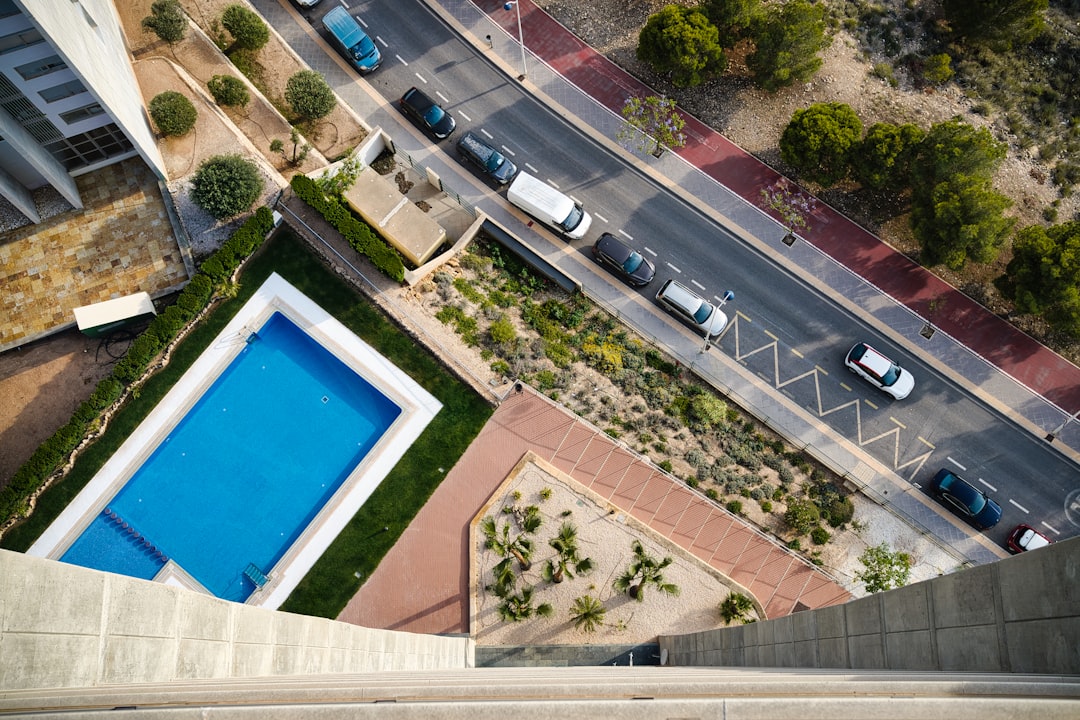
Community Fees in Spain: What Every British Buyer Needs to Know Before Signing (2026)
A couple from Surrey came to me last year. They were ready to put in an offer on a two-bedroom apartment in a Marbella urbanisation with a pool, landscaped gardens and a 24-hour concierge desk. The listing price was €420,000. Perfect numbers, they thought.
Then they read the community fee: €680 a month.
That is £8,250 a year on top of IBI (the Spanish equivalent of council tax), mortgage, Form 210 non-resident tax, and utilities. They walked away, rightly, because nobody had explained what they were signing up for.
Community fees are the single most consistent shock for British buyers on the Costa del Sol. This guide tells you exactly what they are, what they cover, how they are calculated, and the questions you must ask before you sign anything.
What Are Community Fees in Spain?
In Spain, almost every apartment, townhouse, and villa in a shared development belongs to a Comunidad de Propietarios (Community of Owners). This is a legal entity governed by the Ley de Propiedad Horizontal (Horizontal Property Act, first passed in 1960 and updated several times since). Every owner is automatically a member from the moment they complete.
The community collectively owns and maintains all shared elements: the building structure, roof, communal staircases, lifts, gardens, swimming pools, security systems, car parks, and anything else shared between owners. Each month (sometimes quarterly), every owner contributes to the running of these shared spaces. That contribution is the cuota de comunidad, or community fee.
This is not optional. It is a legal obligation under Spanish property law.
How It Differs From a UK Service Charge
UK buyers are familiar with service charges on leasehold flats. Spanish community fees work similarly, but with some important differences:
- All Spanish residential property is freehold (pleno dominio). There is no leasehold. But you still pay for shared costs.
- Debts stay with the property, not the person. If the previous owner owed six months of community fees, those arrears transfer to you on completion unless you verify and clear them first.
- You have a vote. Every owner attends the Junta de Propietarios (AGM) and votes on the budget, special expenditure, and rule changes. One owner, one vote (weighted by ownership share).
- Special levies (derramas) can appear at any time, by vote of the community, for unexpected repairs.
What Do Community Fees Cover?
The budget varies enormously by development, but typical items include:
Standard inclusions:
– Building insurance (seguro de la comunidad)
– Maintenance and cleaning of common areas
– Communal garden upkeep and irrigation
– Swimming pool maintenance and lifeguard (where applicable)
– Lift servicing and maintenance contracts
– Communal lighting, including energy bills
– Building administrator’s fee (administrador de fincas)
– Doorman or concierge service (portero / conserje)
– Gate and access system maintenance
– Pest control
– Contribution to the reserve fund (fondo de reserva): legally required at 10% of the annual budget
Sometimes included, sometimes separate:
– Water supply to individual apartments (usually separate in older developments)
– Rubbish collection (basura): sometimes covered by community, sometimes paid directly to the municipality via IBI
– Car park maintenance
Never included:
– IBI (Impuesto sobre Bienes Inmuebles): you pay this separately to the town hall
– Your own utility bills (electricity, gas, water to your apartment)
– Home contents insurance
– Repairs inside your apartment
What Do Community Fees Cost on the Costa del Sol?
There is no single answer. The range is vast, and it tracks directly with what amenities are on-site. Here is a realistic breakdown by property type:
| Property Type | Monthly Range | What Drives the Cost |
|---|---|---|
| Basic apartment, no pool | €50 – €120 | Stairwell cleaning, insurance, admin |
| Apartment with pool and gardens | €150 – €350 | Pool maintenance, gardening, lifeguard in summer |
| Townhouse in gated urbanisation | €200 – €450 | As above plus perimeter security, access gates |
| Luxury apartment, concierge, gym | €400 – €700 | 24/7 concierge, gym, sauna, underground car park |
| Golf resort villa, La Zagaleta / Sierra Blanca tier | €600 – €1,200+ | Private roads, 24hr security, club facilities, extensive grounds |
To put real numbers on it: a two-bedroom apartment in a standard Estepona urbanisation with a communal pool typically runs €180 to €280/month. The same two-bedroom apartment in a beachfront complex in Puerto Banús with a concierge and underground car park typically runs €450 to €750/month. That difference represents €3,240 to €5,640 a year in additional running costs.
Over ten years, that gap is €32,400 to €56,400. Arguably more important to your budget than the stamp duty difference.
How Are Community Fees Calculated?
Each property within a development has a coeficiente de participación: a percentage share of the whole building, set when the development was first registered at the Land Registry. It is written into the title deeds (escritura).
The coefficient is calculated based on:
– The floor area of your unit
– Your floor level (higher floors typically have higher coefficients, reflecting greater use of lifts and stairwells)
– Location within the building (street-facing vs courtyard)
– Whether you have a garage or storage room included
The total community budget for the year is divided according to these coefficients. If your coefficient is 2.5% and the total annual budget is €180,000, you pay €4,500 a year, or €375 a month.
Why does this matter when comparing properties? A larger apartment on a higher floor in a bigger complex will carry a higher coefficient than a small studio on the ground floor of the same building. Price per square metre is not a reliable guide to community fees.
The Derramas: The Expense Nobody Warns You About
The derrama is a special assessment: a one-off payment voted through by the community to cover an unexpected or capital expenditure that the reserve fund cannot absorb.
Common triggers:
– Roof replacement or major waterproofing work
– Lift refurbishment (mechanical engineers’ estimates typically run €15,000 to €40,000 per lift)
– Swimming pool resurfacing or liner replacement
– Facade repairs (cracking, rising damp, paint)
– Installation of solar panels or EV charging points
– Settlement of a legal dispute the community lost
The key point: derramas do not require individual owner consent, just a majority vote at the AGM. If the community votes to replace the roof and your share of the cost is €3,200, you owe €3,200, payable over a period determined by the vote.
In practice, a well-managed community with a healthy reserve fund absorbs most of these costs without derramas. A poorly managed community with years of deferred maintenance is a ticking financial clock.
How to Check Community Fees Before You Buy
This is where many British buyers fall short. The asking price is easy to find. The full running cost picture requires due diligence, and this is precisely why you need a Spanish property lawyer (abogado) acting for you before any signature.
Ask for these documents before exchanging:
-
Certificado de deudas con la comunidad (Certificate of Community Debt). This is a legal document issued by the community administrator confirming whether the property has any outstanding community fee arrears. Under the Horizontal Property Act, sellers are required to provide this at completion. A good abogado will demand it well before that point.
-
Last three years of community accounts (actas). The minutes of the last three annual general meetings are a window into the health of the community. Look for: repeated derramas, legal disputes, major deferred maintenance, high percentage of defaulting owners.
-
The annual budget (presupuesto anual). This tells you the actual monthly fee. Do not rely on what the estate agent tells you verbally.
-
The reserve fund balance. Spanish law requires the reserve fund to hold at least 10% of the annual budget. Many communities run short of this. A thin reserve fund means future derramas are more likely.
-
Any approved but unpaid derramas. If the community voted through a derrama at the last AGM for a roof repair starting in three months, and the previous owner voted in favour, that obligation may pass to you.
What Happens If You Stop Paying?
Community fee debt is a charge against the property under Spanish law, not just against the individual owner. Specifically:
- The community can register a lien against the property at the Land Registry.
- Unpaid fees from the current and previous year (plus the current year’s already-due amounts) rank ahead of most other claims, including some mortgage interests.
- The community can ultimately pursue a court order to force sale of the property to recover the debt.
This is not theoretical. Spanish courts do process these cases, though it is slow and expensive for everyone involved. The more immediate consequence is that a property with community fee debts cannot be sold cleanly without those debts either being paid off or formally transferred and disclosed.
For buyers: This is why the certificado de deudas is not optional. Your abogado should retain part of the purchase price in escrow at completion until it is confirmed clean, or deduct the debt from the price paid to the seller.
Going to the AGM: Your Rights as an Owner
Once you own, you are a member of the community. The Junta de Propietarios (general assembly) meets at least once a year, usually in the first quarter, to approve the accounts, set next year’s budget, and vote on major decisions.
As a British non-resident owner, you can:
– Attend in person
– Grant a proxy vote to your gestor, abogado, or a neighbouring owner
– Receive minutes (actas) in Spanish after the meeting
If you do not attend and do not send a proxy, you can still be bound by decisions made, so it pays to stay engaged. Most English-speaking gestor firms on the Costa del Sol will attend on your behalf for €50 to €150 per meeting.
Key votes that require a supermajority (3/5 of owners by coefficient):
– Approving major renovation works
– Changing the rules of the community statutes
– Approving a new service contract over a certain value
Votes that require only a simple majority:
– Annual budget approval
– Standard maintenance contracts
– Most derramas below a threshold written into the statutes
Questions to Ask Before You Buy
Run through this checklist with your abogado or before making an offer:
- What is the current monthly community fee (exact figure from the accounts, not the agent)?
- When was it last increased, and by how much?
- Are there any approved derramas pending?
- What does the reserve fund currently hold?
- Are any owners in significant arrears (more than 5% of the budget in default is a red flag)?
- Has the building been surveyed recently, and are there any known structural issues?
- Is there an active legal dispute the community is involved in?
- What does the fee cover, specifically: is water included?
- What is the community’s policy on short-term rentals (this affects both your own plans and the character of the building)?
Community Fees by Area: Real Expectations
To help calibrate your search, here are realistic community fee ranges for the areas we most commonly work across:
Estepona: €150 to €400/month for a two-bedroom apartment. New builds on the New Golden Mile sometimes run higher due to resort-style facilities. The Estepona property guide covers typical budgets.
Marbella: €250 to €650/month is the broad range. Golden Mile and frontline beach complexes regularly exceed €600/month.
Puerto Banús: Some of the highest fees on the Costa del Sol. Frontline marina and beachfront complexes: €450 to €800/month. Budget accordingly.
Sotogrande: Wide range. Standard apartments: €200 to €400/month. Top-end gated complexes with golf access: €500 to €1,200/month. See the Sotogrande guide for context.
Mijas Costa and Fuengirola: Generally lower. A two-bedroom apartment in a typical Mijas Costa urbanisation: €120 to €280/month, which is one of the reasons this area attracts good-value buyers.
Nueva Andalucía and Benahavís: Golf resort communities add to costs. Expect €300 to €700/month for larger units in established complexes.
These ranges assume a two-bedroom apartment unless stated. A penthouse or larger unit with a higher coefficient will sit at the top of those ranges or beyond.
The Bottom Line: Factor It In From Day One
Community fees are not a surprise once you know to ask. The mistake is not asking until you are already emotionally committed to a particular property.
When you compare two properties at the same price point, check the full monthly commitment:
| Cost | Property A | Property B |
|---|---|---|
| Mortgage (30yr, 70% LTV, 3.5%) | €1,450/month | €1,450/month |
| Community fee | €180/month | €580/month |
| IBI (€350k property, estimated) | €75/month | €75/month |
| Form 210 imputed tax | €30/month | €30/month |
| Buildings insurance | €35/month | €35/month |
| Total monthly cost | €1,770/month | €2,170/month |
That is a €4,800 annual difference on what looks like an identical investment. Over a 10-year hold, that is €48,000. It may also affect your rental yield calculations if you plan to let the property.
A realistic total-cost model is part of what we work through with every buyer we help. The purchase price is the beginning of the conversation, not the whole of it.
For a full picture of annual ownership costs beyond community fees, read our guide to annual running costs for British property owners in Spain.
Ready to Find the Right Property With the Right Numbers?
If you are searching on the Costa del Sol and want someone to cut through the noise, check the community accounts, and introduce you only to properties that stack up financially, we can help.
We are not a traditional estate agency. We work for buyers, pulling together options from across the market (including off-market) and helping you compare the full picture, not just the headline price.
Tell us what you are looking for and we will put together a shortlist. No obligation, no pressure.
